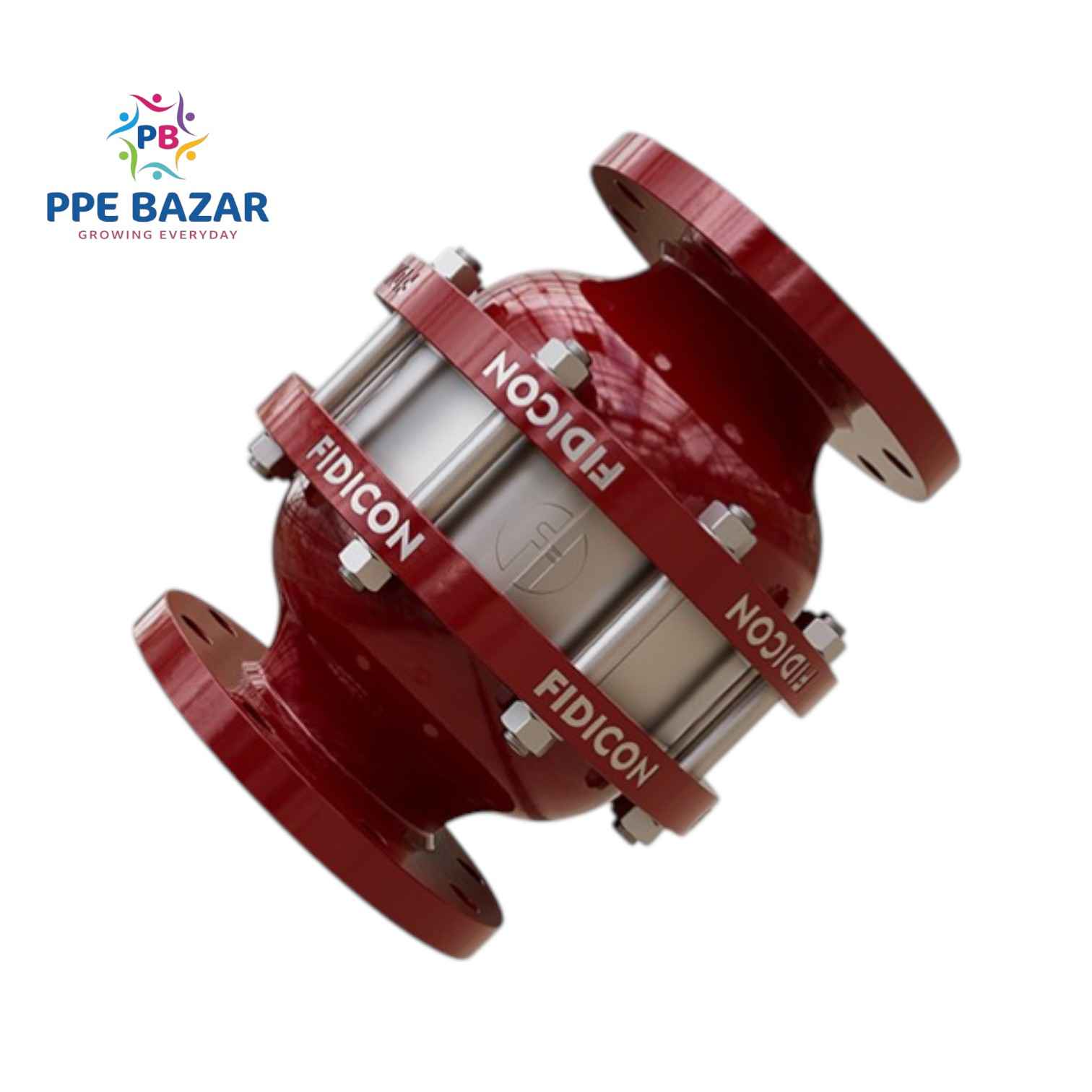
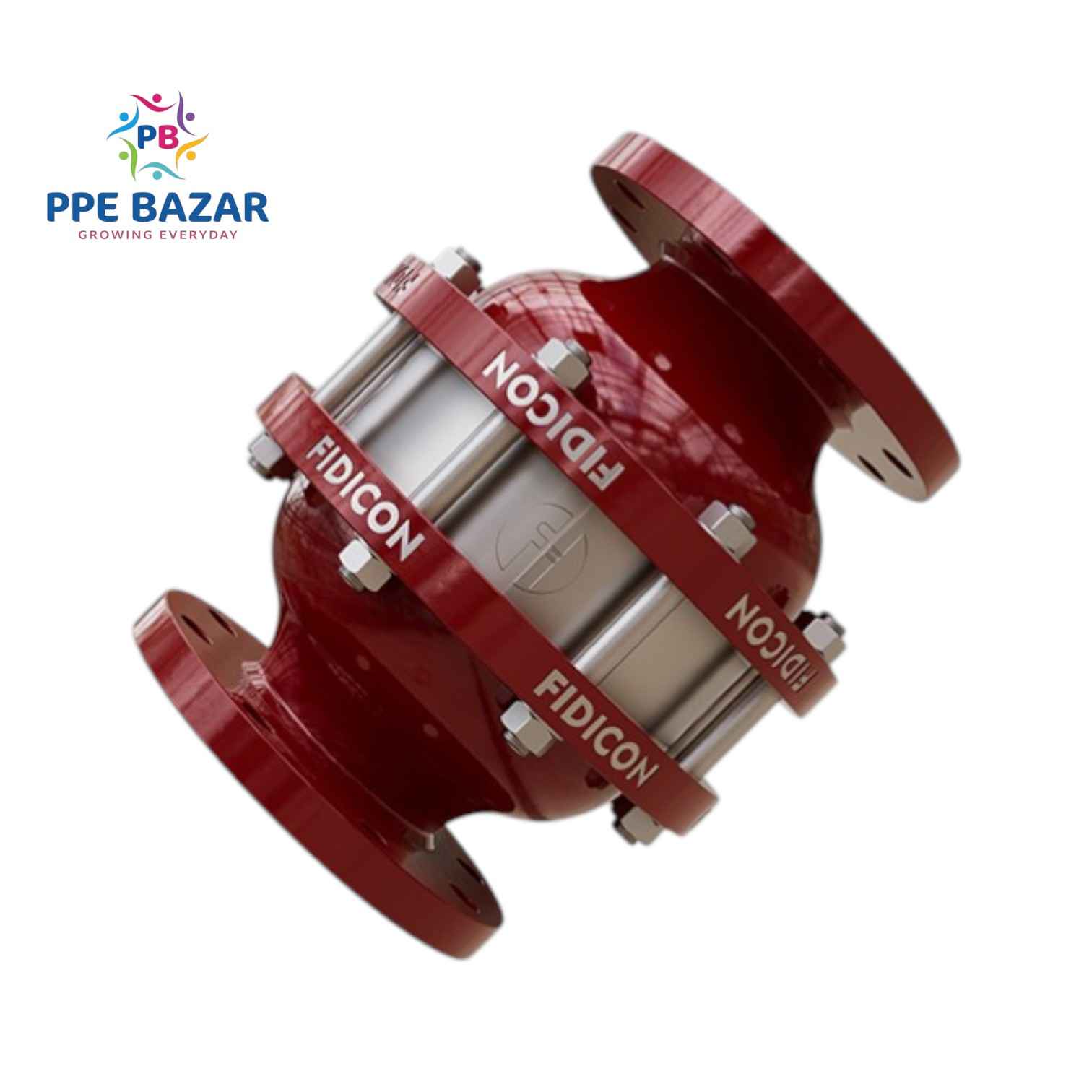
The In-Line Flame Arrester is a critical safety device designed to prevent the propagation of flames through pipelines carrying flammable gases, vapors, or volatile mixtures. It ensures that any ignition occurring downstream or upstream does not travel through the piping system, thereby protecting equipment, storage tanks, and personnel.
This unit is engineered for industrial applications requiring explosion protection, particularly in hazardous environments such as oil & gas, petrochemical plants, chemical processing units, and fuel handling systems.
2. Design & Construction
- Type: In-Line Flame Arrester
- Mounting: Installed directly within pipeline systems (horizontal/vertical orientation possible depending on design)
- Connection Type:
- Flanged Ends: As per ANSI B16.5, Class 150, Raised Face (RF)
- Size: 2” (DN50)
3. Material of Construction
- Body: Stainless Steel SS304
- Flame Arresting Element: Stainless Steel SS304 (multi-layer crimped ribbon / mesh element)
- Flanges: SS304, machined as per ANSI standards
- Gasket (if applicable): Compatible with process media (typically PTFE / CAF)
4. Working Principle
The flame arrester operates on the principle of heat absorption and flame quenching:
- When a flame front enters the arrester, it passes through a narrow gap flame arresting element
- The element absorbs heat from the flame, reducing its temperature below the ignition point
- This prevents the flame from propagating further downstream/upstream
- Ensures containment of combustion within a limited section
5. Performance Characteristics
- Flame Quenching Capability: Prevents deflagration flame transmission
- Type of Protection: Suitable for deflagration (low-speed flame) protection
- Bi-directional Protection: Effective in both directions (depending on model)
- Pressure Drop: Optimized design to ensure minimal pressure loss across the unit
- Operating Temperature: Suitable for standard industrial temperature ranges (customizable if required)
- Corrosion Resistance: High resistance due to SS304 construction
6. Standards & Compliance
- Designed in accordance with relevant industrial safety practices
- Flange standard: ANSI B16.5 Class 150 RF
- Manufacturing and testing aligned with general requirements of:
- ISO / API guidelines (where applicable)
- Industry best practices for explosion protection systems
(Note: Specific certifications like ATEX / ISO can be added if applicable to your product)
7. Applications
- Oil & Gas Industry – fuel gas lines, storage tank vents
- Petrochemical Plants
- Chemical Processing Units
- Pharmaceutical Manufacturing
- Refineries & Terminals
- Biogas & LNG Systems
- Solvent Handling Systems
8. Installation Guidelines
- To be installed in-line with the pipeline using standard flange connections
- Ensure proper gasket sealing to prevent leakage
- Recommended installation near potential ignition sources or tank connections
- Orientation should comply with manufacturer guidelines for optimal performance
9. Maintenance & Inspection
- Periodic inspection required to check for:
- Blockage due to debris or condensate
- Corrosion or fouling of flame arresting element
- Cleaning recommended at regular intervals depending on service conditions
- Ensure element integrity for reliable flame arresting performance
10. Key Features
- Robust SS304 construction for durability and corrosion resistance
- Precision-engineered flame arresting element
- Compact and easy-to-install inline design
- Low pressure drop across the unit
- Reliable protection against flame propagation and explosion hazards
- Long service life with minimal maintenance
11. Product Identification (Example)
- Model: FDI-FA-707
- Type: In-Line Flame Arrester
- Size: 2” (DN50)
- Flange Standard: ANSI B16.5, Class 150 RF
- Material: SS304 (Body & Element)
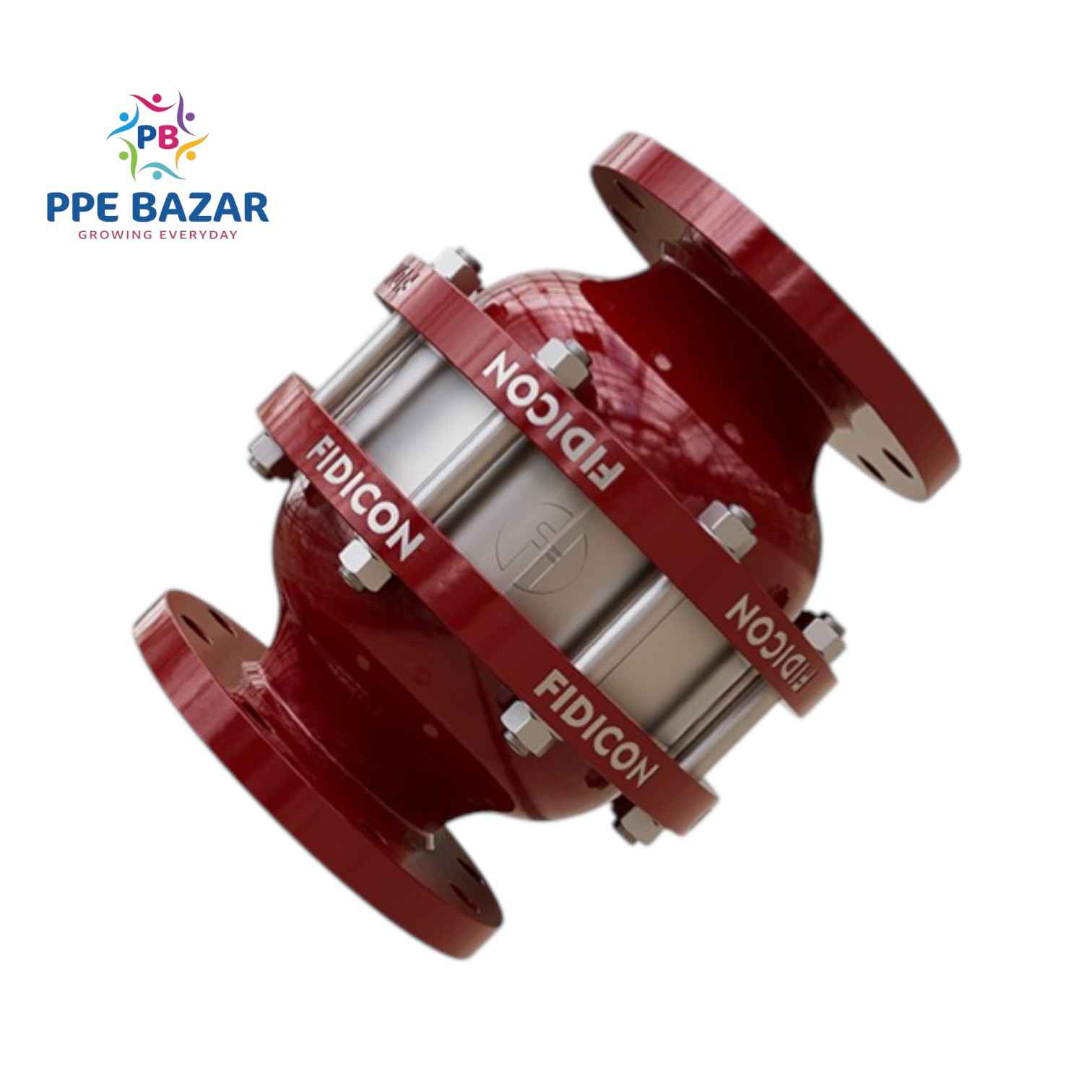
The In-Line Flame Arrester is a critical safety device designed to prevent the propagation of flames through pipelines carrying flammable gases, vapors, or volatile mixtures. It ensures that any ignition occurring downstream or upstream does not travel through the piping system, thereby protecting equipment, storage tanks, and personnel.
This unit is engineered for industrial applications requiring explosion protection, particularly in hazardous environments such as oil & gas, petrochemical plants, chemical processing units, and fuel handling systems.
2. Design & Construction
- Type: In-Line Flame Arrester
- Mounting: Installed directly within pipeline systems (horizontal/vertical orientation possible depending on design)
- Connection Type:
- Flanged Ends: As per ANSI B16.5, Class 150, Raised Face (RF)
- Size: 2” (DN50)
3. Material of Construction
- Body: Stainless Steel SS304
- Flame Arresting Element: Stainless Steel SS304 (multi-layer crimped ribbon / mesh element)
- Flanges: SS304, machined as per ANSI standards
- Gasket (if applicable): Compatible with process media (typically PTFE / CAF)
4. Working Principle
The flame arrester operates on the principle of heat absorption and flame quenching:
- When a flame front enters the arrester, it passes through a narrow gap flame arresting element
- The element absorbs heat from the flame, reducing its temperature below the ignition point
- This prevents the flame from propagating further downstream/upstream
- Ensures containment of combustion within a limited section
5. Performance Characteristics
- Flame Quenching Capability: Prevents deflagration flame transmission
- Type of Protection: Suitable for deflagration (low-speed flame) protection
- Bi-directional Protection: Effective in both directions (depending on model)
- Pressure Drop: Optimized design to ensure minimal pressure loss across the unit
- Operating Temperature: Suitable for standard industrial temperature ranges (customizable if required)
- Corrosion Resistance: High resistance due to SS304 construction
6. Standards & Compliance
- Designed in accordance with relevant industrial safety practices
- Flange standard: ANSI B16.5 Class 150 RF
- Manufacturing and testing aligned with general requirements of:
- ISO / API guidelines (where applicable)
- Industry best practices for explosion protection systems
(Note: Specific certifications like ATEX / ISO can be added if applicable to your product)
7. Applications
- Oil & Gas Industry – fuel gas lines, storage tank vents
- Petrochemical Plants
- Chemical Processing Units
- Pharmaceutical Manufacturing
- Refineries & Terminals
- Biogas & LNG Systems
- Solvent Handling Systems
8. Installation Guidelines
- To be installed in-line with the pipeline using standard flange connections
- Ensure proper gasket sealing to prevent leakage
- Recommended installation near potential ignition sources or tank connections
- Orientation should comply with manufacturer guidelines for optimal performance
9. Maintenance & Inspection
- Periodic inspection required to check for:
- Blockage due to debris or condensate
- Corrosion or fouling of flame arresting element
- Cleaning recommended at regular intervals depending on service conditions
- Ensure element integrity for reliable flame arresting performance
10. Key Features
- Robust SS304 construction for durability and corrosion resistance
- Precision-engineered flame arresting element
- Compact and easy-to-install inline design
- Low pressure drop across the unit
- Reliable protection against flame propagation and explosion hazards
- Long service life with minimal maintenance
11. Product Identification (Example)
- Model: FDI-FA-707
- Type: In-Line Flame Arrester
- Size: 2” (DN50)
- Flange Standard: ANSI B16.5, Class 150 RF
- Material: SS304 (Body & Element)